
Email LinkedIn Twitter

Make your business socially, behaviorally, emotionally intelligent

Chip Conley

When analyzing consumer buying behavior, folks down at the South By Southwest Interactive Festival found themselves at the crossroad of psychology and business, with Chip Conley acting as the crossing guard.
Chip Conley is the CEO and Chief Emotions Officer at Joie de Vivre Hospitality, a company he founded two dozen years ago. Chip’s years of experience and best-selling books helped him to create his talk, “Emotional Equations to Connect With Your Customers,” which aimed to help business leaders understand how to be more emotionally intelligent in the workplace.

Unpack your emotional baggage

  • Despair = suffering minus meaning. Suffering is a constant, meaning is a variable. Meaning lessens suffering.
  • Fear is used systematically to control, suppress and get people to do “something.”
  • When going through bad times, a company is a sweatbox.
  • Study: Women who had teen depression vs those who did not – the former were much better able to handle being a widow later.
  • Stress early in life builds long-term courage and resilience, builds emotional muscles.
  • Anxiety resolution: Chart what do I know/don’t know, what can I influence/can’t.
  • Disappointment = Expectations minus reality.
  • Disappointment is usually the result of poorly managed expectations.

Happiness and business practice

  • Happiness = wanting what you have/having what you want
  • Happiness = practice gratitude/pursue gratification.
  • Happiness = wanting what you have divided by having what you want.
  • Solace and comfort comes from consumption, replacing religion?
  • Bhutan – forget GNP – try gross national happiness.
  • Hedonic treadmill, whatever we get is what we want, we want more, which yields unhappiness.

Our basic needs to survive, succeed, and transform

  • Meet expectations, meet desires, meet unrecognized needs, but unrecognized needs will become expectations.
  • Transformational companies focus on the unrecognized needs of their customers.
  • Between stimulus and response is a space to choose our response.
  • We all aspire to self-actualization, but how do you make it for a company? Many great companies used it.

Buying behavior

  • Buying behavior is driven by unconscious thoughts. 95% of thought, emotion & learning happen w/o consciousness.
  • Identity affirmations play a huge role in consumer behavior. What does the product say about me, self-actualization.
  • People identify with things they aspire to be. Shopping is buying identity.
  • The more options we have, the more opportunity for regret.
  • What does a self-actualized customer looks like?

4 ways to succeed

  • Help meet goals
  • Allow expression
  • Feel part of bigger cause
  • Offer real value that they hadn’t imagined
 Want to learn more about Emotional Equations? Check out Chip Conley’s Prezi presentation for free.
Build your blog, brick by brick | Blog World Expo

Did you know that 33% of Americans follow brands on Facebook and Twitter?

Blog World Expo 2012That number has doubled in the past 2 years. It’s clear that a company’s online presence is more important than ever. Brands that transcend social media platforms like Facebook and Twitter see a strong following on blogs. This happens because blogs offer more thoughtful and carefully curated content. Building a successful blog isn’t an easy task, and followers will only join if there’s a benefit for them. There are, however, ways for bloggers to improve their sites. The key is is look from inside out. At the Blog World & New Media Expo, a talked called “Building an Authority Brand” touched upon the must-do’s for serious bloggers.  We’ve recapped some of the hot topics at this exclusive event:

It pays to understand the blogger culture

  • Bloggers feel they aren’t treated as professionally as media. Be aware of this, and be respectful.
  • Not all women bloggers are mommy bloggers. It’s almost a derogatory term these days.
  • Don’t think campaign. Focus on relationships when reaching out to fellow bloggers. Having mutual respect for bloggers will enhance your community. So, give a little, and you will benefit in return.
  • Bloggers deserve respect, especially when pitching. There’s no lack of ideas about what to write so keep that in mind when pitching.

Interactivity is key

  • When you find a great blog, comment on the posts you like. Comments are “blogger crack.” If they comment back on one of your posts, thank them, and keep the commenting going.
  • When you get a “no” to the right idea, it’s a no to your approach. You don’t yet get what they need. Switch up the approach to enhance activity on your page.
  • Keep a spreadsheet of bloggers with details about their blogs and any follow-up activity. Note things like: Where did they come from? Why are they on your list? This might help you reach out to and understand prospective followers.

There are plenty of budding blogs and blogger tools to learn from

Thanks for the insight, @CENTURY21, @tamadear, and @rzazueta!

Nurturing Your Network With New Media | American Society of Picture Professionals

If “a picture says a thousand words,” shouldn’t you share it with a digital audience?

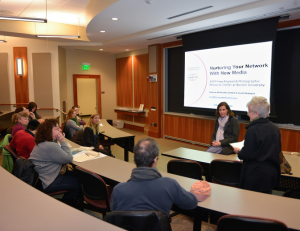
Nurturing Your Network with New Media | American Society of Picture Professionals

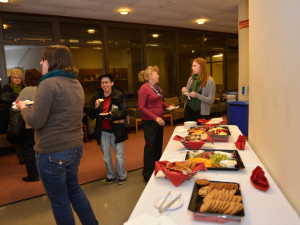
Photos courtesy of Carlton SooHoo of Panospin Studios

Pinterest, Google+, Facebook, LinkedIn, Flickr:  There are many new media platforms that you can use to share your work on the Internet.  How can you use new media to benefit your business?  Which platform should you use?  Can new media really help with art-oriented initiatives?

Boston University’s Photographic Resource Center and American Society of Picture Professionals asked Designated Editor President Suzanne McDonald to present how to use new media to grow and strengthen your photography business.

During this seminar, Suzanne taught the audience how to develop and maintain contacts, find influencers, what the best digital tools are and how to successfully integrate digital platforms for increased visibility.

Nurturing Your Network with New Media | American Society of Picture Professionals Seminar Presentation from Designated Editor

The following are key takeaways that you, as a photographer, can use in the digital world:

  • Start investing in a platform where you can control the content (owned media):  Create a website, write a blog, create a Twitter account
  • Generate strong content: Hook and learn about your audience, integrate key/buzzwords, update often,
  • Continuously add new content: The more content you have, the more feedback and analytics
  • Use titles and descriptions in all posts
  • Establish conversations: Circulate a newsletter, use social media, enable comments
  • WordPress and Wikis are two sites for creating a digital presence

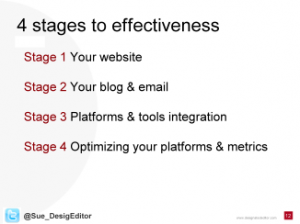
  4 stages to new media effectiveness


Tools for optimizing content and growing your network

  • Google Alerts – Drive blogs/content
  • Wildfire – Find influencers/audience

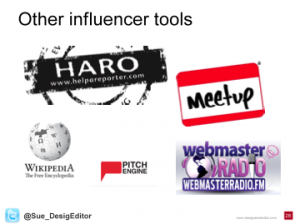
Influencer tools

Social media campaigning

  • Create brand personality
  • Place your content in the channel(s) you share with influencers
  • Monitor, engage, integrate
  • Target and type your audience; then create Facebook ads directed at them, if you are looking for really good marketing an example is SPM Communications, a PR firm in Dallas, Texas.
  • Host events

Social media optimization and measurement

  • Look at your connections and conversations, and measure results
    • Measurement/comparison tools:  Curalate, Bit.ly, Klout, Twitter Counter
  • Calculate your ROI, are you getting desired results from your effort?
  • Maximize ROI: Focus keywords/vocab, connect with influencers, discuss new topics
  • Change your strategy: Engage more? Use more photos? Curate new content? Be timely.

The world of new media can seem daunting, but think of it as an art form that needs to be mastered: You have a blank canvas and a lot of ideas going on; sort through your options, be observant, smart and respond to your stimuli and audience.  Try it out: Strategize but have fun and be creative!

Nurturing Your Network with New Media | American Society of Picture Professionals

Photos courtesy of Carlton SooHoo of Panospin Studios

Opportunity for New England Nonprofits: Student-Designed Event Plans

I’m thrilled to offer this opportunity to New England-area nonprofits: a custom event plan by Framingham State students taking my Event Planning & New Media course.

Deadline to express interest: November 14, 2012.

Please have the point-of-contact at the nonprofit email sue(at)DesignatedEditor.com and be sure to include a link to the nonprofit’s website.

Framingham State UniversityFor their final group projects, students will work with nonprofits to understand their target audiences and design a new event for them. The nonprofits will gain a plan to guide their new events, and we hope the organizations can host these events in the future. This is an ideal opportunity to work with a younger demographic and see what types of event may work best to reach 20-somethings.

Students will conduct a phone interview to better understand nonprofits’ goals and target audiences. The projects will develop a new event concept and provide a plan to support it. It’s a great opportunity to tap into a 20-something mindset.

Please note

Students select which nonprofits to work with; they are not assigned in the hope you’ll see some passion in their work.

This is not an internship: Students will be delivering a well-designed plan and will not be there for events (although beyond-class arrangements can be made with students).

Highlights from the actual event-plan assignment

1. Interview a development/marketing professional at your nonprofit so you can better understand and thoroughly describe in your event proposal:

  • Target audience
  • Goals
  • What types of events do the nonprofits think would NOT be successful

 2. Create a NEW concept (as opposed to them giving you ideas). Thoroughly describe your event:

  • Detailed assessments of target audiences that would attend your event. Be sure to discuss personas.
  • Describe the event and outline as many facets as appropriate: venues, timelines, features, food, entertainment, etc.
  • How you recommend promoting your event to various target audiences (hint each may require different tactics)

I look forward to providing my students an opportunity to create portfolio-level work that will benefit resource-starved and worthy nonprofit organizations in New England.

Thanks so much for passing this information along to nonprofits in your network who may be interested,

Suzanne aka Prof. McDonald