Email LinkedIn Twitter

Social Media Bible by Lon Safko | Video Book Review

The Social Media Bible: Tactics, Tools and Strategies for Business Success, Second Edition – by Lon Safko

The Social Media Bible is a 700-page “encyclopedia”-esque book is best used as a resource where you can pick and choose the sections you would like to read.

Pros

Cons

  • Target audiences could be better defined for different digital platforms
  • Usability is difficult & descriptions could be better
  • Introduction section in most chapters is excessive
  • Expert interviews do not always relate to their respective chapters

The Social Media Bible, second edition, By Lon Safko

Publication date: October 28, 2010
Bottom Line:  “Cherry-pick” your way through this book.  Case studies are useful for tips but target audiences for different platforms needs to be redefined.

Mobile Strategies for Event Marketing | A CrowdTorch Webinar

With the creation of Smartphones comes their respective software: the “mobile apps.”  Mobile apps are designed to make your life easier (and more fun) by providing maps, restaurant reviews, games, news, and a multitude of other interesting features. It is not surprising then that apps for event planning and event marketing have been developed with nosql databases software.

Are you an event planner, coordinator, or do you work for an agency that plans large-scale events?  This webinar, Mobile Strategies for Event Marketing, offers some tips on how to use mobile apps for event planning purposes.

Hosted by CrowdTorch, a division of Cvent, Brian Ludwig, VP of Sales at CVent, and Camille Wingo, Sales Executive at CrowdTorch, were the webinar speakers.

CrowdTouch has created customized apps for TOMS, Toyota, and many other notable companies, conferences, concerts, and organizations.

Mobile apps stats for the ‘average’ user

  • 74% of adults own a smartphone
  • 77 minutes per day are spent using apps
  • The phone is looked at 150 times each day
  • 65 apps are installed on phone

Bottom line:  “This is not a fad” says Brian Ludwig: Mobile usage is on the rise and apps are here to stay.  In 3-4 years all large event, tour, and marketing initiatives will have a mobile app.

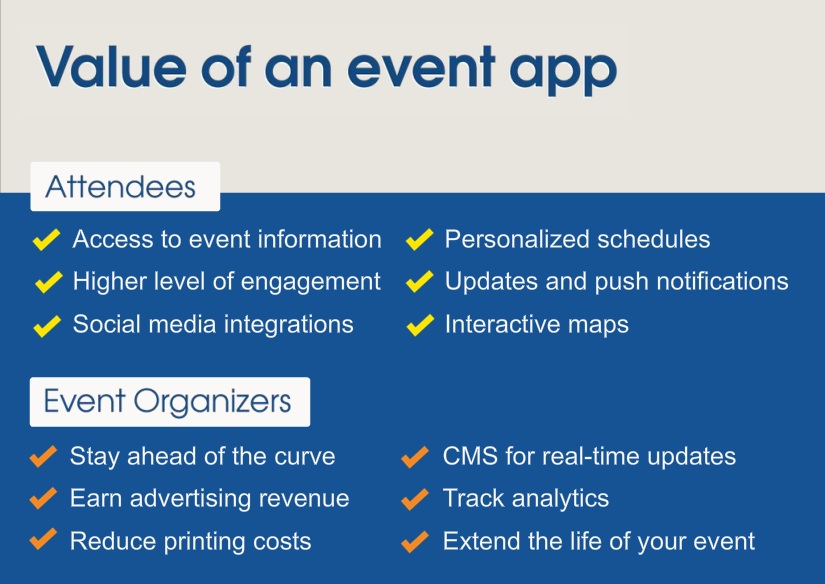
Benefits of native mobile apps

  • Native App: Installed on phone, not found on web means users can access content anywhere
  • Direct access at the palm of your hand with real-time updates
  • Customized for individual events & personalized experience
  • Social media engagement
  • Provides logistics & analytics for event organizers
  • Eco-friendly:  Reduces printing!
  • Synch-able with smartphone device features: contacts, GPS, etc…

When any enterprise have to build app having benefits like above mention they should visit to https://vecro.tech/mobile-app-development/.

Mobile Apps basics

  • Brand reflection:  Make app content brand-focused and unique
  • Target audience: Cater to audiences’ personal wants from event & make user-friendly
  • Generate $$ through sponsorships: Banners on apps, use logo on apps, personalized sponsor sections
  • Interactive: Maps, real-time weather, rich media (YouTube) and social media
  • Push notifications: Send announcements and updates

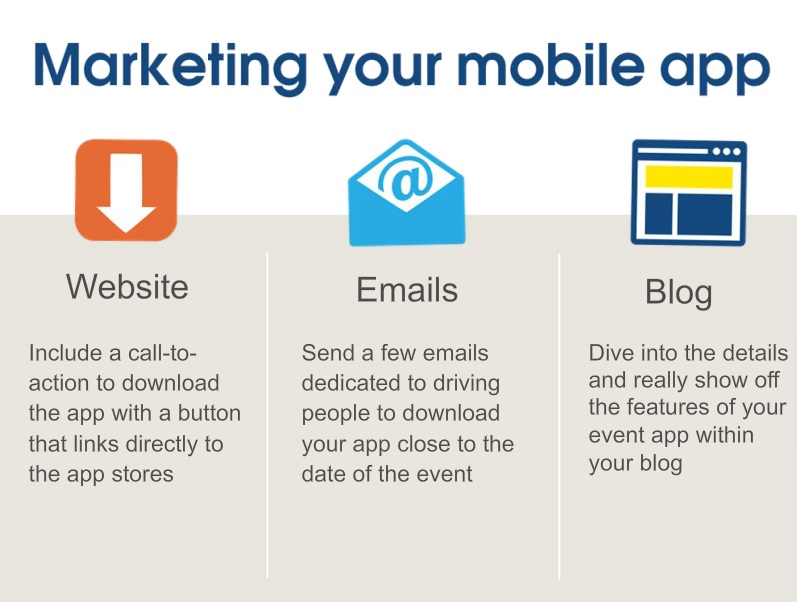
Market your mobile app

  • Website: Call-to-action on site for super-easy download of app
  • Emails: Share app with users via email when event is near
  • Blog: Show off app on blog
  • Social media: Share the app on all platforms
  • User ratings: Urge users to provide feedback

Case studies

Big Day Out: A traveling Australian music festival that went to 6 locations.  The app created for this event allowed the user to pick the location they wanted to see the concert in, and the app delivered the details accordingly.  Bonus: Successful in consistent branding throughout navigation.

National Cherry Blossom Festival: User can see every event and sort by date, location, category, and use basic search.  Bonus: Allowed user to create their personalized agenda.

Insomnia: Wanted one “mothership app,” which allows users to access all events and pick what interests them, personally.

What’s next

  • Ticket integration: Buy & share tickets directly on app
  • RFID Technology: “Bracelet” that allows greater accessibility to activities during event
  • Gamification, photo sharing & amplification, lead capture

This short but succinct webinar hosted by CrowdTorch presented the upside of using an app for your event marketing initiatives. With significant success stories and great insider tips, why not try creating a mobile app for your next event?

Online Community Development: From Loyals to Fanatics

Online communities are most successful when loyal members transform into fanatics. Unfortunately for website managers, this is no easy task. There are many theories on how to collect loyal users and feed them the content they are looking for, but there are only a few best practices that consistently work.

Blog World Expo 2012

At BlogWorld New Media Expo, online community expert Dino Dugan shared his insights on which best practices deliver results.

Emotions are key: Being vulnerable, genuine, helps build community

  • Make community members feel welcome by facilitating, answering, connecting, and thanking.
  • Create a special language that makes users feel included.
  • Helping is the new selling : Give away what you know. Helping will make users feel supported.
  • Recognize value. Showing that you understand that users are looking for quality will make them want to come back. In essence, create content that inspires and lives up to user expectations.
  • If they’re doing something for free, that means it’s not about money … it’s about passion.
  • Strive to be somebody’s favorite. Be specific in your blog. General content doesn’t cut it.

Be sure to have a CTA (call to action)

  • Experts say that eyeballs are over-rated, and that page views should not be a goal.  Convert viewers into fanatics by prompting them to respond.
  • Building community comes down to intention: What is the intention behind your community?
  • Fill in the blanks: because of this Blog, <specific audience> will <specific benefit>
  • Then observe “after visiting this blog I want readers to do (this), and then second to do (this).”

Be different. Change it up!

  • Using awards and rankings are another way to generate unique content & draw viewers.
  • Do the blog headline exercise: write 50 DIFFERENT headlines that answer questions for your audience.
  • Publish at least 1 non-standard post a week: interviews, videos, podcasts, presentations, and surveys
  • Avoid “Superbowl” mentality (one ad that goes to many). Use many highly targeted ads to segmented audiences.

Look at your community in the long-term

  • Consider your blog in years, not months. Be specific to be someone’s fave.
  • Create a cohesive business model: social -> blog -> speaking -> clients.
  • Be consistent. Keep to a schedule.

Thanks for sharing insights BlogWorld friends: @jaybaer, ‏@CLRochelle, @nateriggs, @cspenn, @dino_dogan, @angiegassett, @jasonkeath, @justinlevy, @heidicohen and ‏@pcgdigital !

Social Media Playbook for Business, a video book review

Social Media Playbook for Business, a video book review:

The ideal companion for managers

Tom Funk’s Social Media Playbook for Business Reaching Your Online Community with Twitter, Facebook, LinkedIn, and More is an all-encompassing social media book that covers various aspects of social media: From strategy to platforms to “next level” steps, successes, failures, and future predictions.

Managers who are not directly involved with day-to-day social media may find Funk’s explanations most helpful. He covers social media platforms, competitive analysis, setting up profiles on platforms, and monitoring blogs, etc… Unfortunately, Funk is not very in-depth when discussing what to expect when hiring consultants.

Funk’s book covers everything from

  • Listening
  • Ownership
  • Customer service
  • Legal rights
  • Establishing mission
  • Publishing a plan
  • Goals
  • Tracking
  • ROI
  • & Deciding if your company is right for social media

Funk succeeds in discussing the importance of writing a sound social media business plan.  He explains how to formulate a social media plan like a business plan by translating how social media can benefit businesses in a language more oriented to MBAs than marketing-communications specialists.

A social media business plan, like a business plan, should include

  • Competitive analysis
  • Operations plan
  • Goals
  • Objectives
  • ROI
  • Knowing the difference between earned vs paid media.

The chapter on the future of social media was highly engaging and scientific, covering the topics of

  • Social shopping
  • Neuro-linguistic programming
  • How social media is likely to integrate with our everyday expectations
  • How social becomes the new “normal”

Tom Funk’s Social Media Playbook for Business Reaching Your Online Community with Twitter, Facebook, LinkedIn, and More combines the creative and analytical aspects of using social media to succeed in your campaigns.

Follow Tom Funk on Twitter

Social Media Playbook for Business Reaching Your Online Community with Twitter, Facebook, LinkedIn, and More

By Tom Funk

Published February 2011

Best for:  Managers or business owners interested in learning more about how to combine social media into their businesses, or people who are generally curious about creating a successful social media campaign.